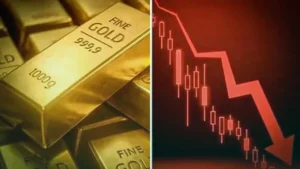
Gold (XAU/USD) is facing renewed selling pressure during the Asian session, retreating toward the $4,025 support zone. While recent US inflation data—specifically the Consumer Price Index (CPI) and Producer Price Index (PPI)—initially provided a reprieve for bullion by cooling interest rate expectations, the metal is struggling to sustain momentum against a backdrop of geopolitical tension and persistent energy-driven inflation fears.
For active traders, the primary conflict lies between the cooling US price environment and the aggressive stance of the Federal Reserve. Although the dip in PPI and CPI suggests price pressures are easing, the strength in crude oil prices is keeping the specter of additional rate hikes alive. This environment necessitates a cautious approach, as non-yielding assets like gold are currently caught between inflationary hedging demand and the opportunity cost imposed by high interest rates.
Key Market Drivers
The fundamental landscape for gold is currently dominated by two opposing forces. On one side, the Bureau of Labor Statistics reported a significant cooling in inflation metrics, with the PPI falling 0.3% in June and the yearly rate decelerating to 5.5%. This shift in the macro narrative initially pressured the US Dollar (USD), providing a brief tailwind for gold prices.
However, this bullish impulse for precious metals is being neutralized by supply-side risks in the energy sector. Heightened US-Iran tensions have disrupted stability in the Strait of Hormuz, with active kinetic conflict—including airstrikes and retaliatory drone attacks—keeping crude oil prices near one-month highs. These threats to global energy logistics have reignited concerns that persistent energy inflation could force the Federal Reserve to implement at least one more 25-basis-point rate hike in 2026. This potential for higher-for-longer rates serves as a structural headwind for gold, which tends to underperform when the cost of holding cash increases.
Trader Takeaways
- Monitor the $4,000 psychological level as a primary pivot; a failure here likely signals a return to mid-year lows.
- Respect the technical integrity of the current downward parallel channel, which continues to dictate the path of least resistance.
- Watch crude oil futures closely; as long as energy prices remain elevated due to regional instability, gold’s upside is likely to be capped by rate-hike speculation.
- Avoid over-committing to recovery plays, as the current RSI and MACD readings suggest only tentative stabilization rather than a trend reversal.
- Utilize the $4,093.63 resistance level to gauge the strength of any potential short-term counter-trend rallies.
Levels and Signals to Watch
Technical price action confirms that XAU/USD remains entrenched in a bearish trend, consistently trading beneath the 200-day Simple Moving Average (SMA). To the downside, the immediate focus is on the $4,000 round figure. A sustained break and acceptance below this support level would likely invite further selling, exposing the year-to-date low near the $3,943-$3,942 range. A breach of this support could see the metal drop toward the lower boundary of the descending channel, located at $3,675.71.
On the upside, traders should look for a reaction at the upper boundary of the descending channel, currently positioned at $4,093.63. Selling pressure is expected to intensify at this level. Only a decisive move and consolidation above this upper band would shift the technical bias, opening a path to challenge the 200-day SMA, which sits as a major structural barrier near $4,495.94.
Cross-Asset Context
Gold’s performance is tightly coupled with the strength of the US Dollar and the volatility of the energy markets. With the USD having recently hit its lowest level since June 18 following the inflation report, the greenback’s ability to recover will be essential in confirming gold’s next leg. Concurrently, the correlation between gold and oil has shifted; normally an inflation hedge, gold is currently being negatively impacted by oil’s strength, as that strength reinforces the Fed’s hawkish policy path.