Oil markets are currently navigating a heightened state of alert as geopolitical instability in the Middle East reaches a critical juncture. Crude prices are maintaining their position near one-month highs as participants digest reports of a tenth consecutive night of U.S. military strikes on Iranian interests and emerging evidence of renewed maritime hostilities within the Strait of Hormuz.
For traders and energy investors, this environment underscores a transition from a demand-focused narrative to one dominated by supply-side volatility. The persistence of these developments suggests that the current risk premium embedded in energy benchmarks may not be transitory, necessitating a recalibration of tactical positioning as the potential for disrupted physical flows remains elevated.
Key Market Drivers
The primary catalyst for the current price action is the escalating friction between the United States and Iran, which has manifested in sustained kinetic operations. This ongoing tension is no longer an isolated incident but a multi-day engagement that directly threatens the integrity of one of the world’s most vital energy transit chokepoints.
The reported attacks on oil tankers in the Strait of Hormuz serve as a direct stress test for global supply chains. Traders are responding to the prospect of higher shipping insurance premiums and the potential for a forced rerouting of tankers, which would inherently tighten the global supply-demand balance. The market is currently operating in a liquidity state characterized by caution, as participants assess whether these events will trigger a wider regional escalation that could severely impede crude exports from the Gulf.
Trader Takeaways
- Monitor Chokepoint Traffic: Closely observe any confirmed reports of vessel delays or rerouting in the Strait of Hormuz, as this is the primary indicator of immediate physical supply disruption.
- Volatility Management: Expect elevated intraday volatility. Tighten stop-loss parameters on existing long positions to account for unpredictable headline-driven price swings.
- Shift in Sentiment: The market is exhibiting a sustained risk premium. Be prepared for a lack of significant retracement as long as the current military campaign continues.
- Supply Chain Transparency: Watch for official updates regarding energy sector operations. Confusion or conflicting reports during these windows often lead to unsustainable price gaps.
- Avoid Over-Leveraging: Given the geopolitical sensitivity, avoid aggressive position sizing until the current military cycle shows signs of de-escalation or stabilization.
Levels and Signals to Watch
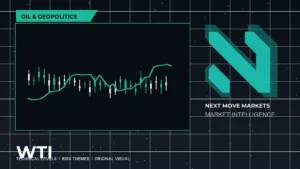
Current price action is testing resistance levels established over the past month. Traders should monitor whether the market can hold these gains during the reopening of electronic trading sessions. A failure to consolidate above these recent highs could signal that the geopolitical risk is already priced in, potentially inviting profit-taking.
Conversely, a sustained break above immediate resistance would likely catalyze further momentum buying. From a risk management perspective, the primary support level to observe is the recent consolidation zone; a breakdown here would invalidate the current bullish structure prompted by the regional conflict. Market participants should look for volume confirmation on any significant breakout to ensure the move is supported by institutional flows rather than speculative retail activity.
Cross-Asset Context
Energy movements are currently serving as a lead indicator for broader risk sentiment. When crude prices spike due to supply fears, equity markets—particularly those with heavy exposure to energy-importing sectors—often experience reflexive weakness. Additionally, the heightened uncertainty is bolstering demand for traditional safe-haven assets. Investors are keeping a close watch on the U.S. Dollar (DXY) as a strengthening dollar often acts as a headwind for oil, though this relationship is currently being decoupled by the overriding influence of regional conflict-driven supply risk.