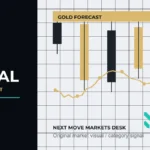
Gold is currently hovering near multi-month highs, sustained by a cooling inflation environment that has reshaped interest rate expectations. Following July’s consumer price index release, the market has largely priced out the probability of a Federal Reserve rate hike in September. This shift in sentiment provides a favorable backdrop for non-yielding assets, as the opportunity cost of holding gold diminishes when the trajectory of central bank tightening slows. While the metal maintains a constructive posture, recent activity suggests a tactical shift as some market participants begin liquidating positions to lock in gains after the recent surge.
Macro Catalysts and Liquidity Constraints
The primary engine behind gold’s valuation remains the forward-looking expectations for Federal Reserve policy. The metal thrives when the cost of capital is perceived to be peaking, as high-interest environments typically drain liquidity from non-interest-bearing stores of value. With inflation data aligning with consensus, the market is currently testing its conviction regarding the Fed’s next move. However, the emergence of profit-taking indicates that participants are wary of overextending in a market sensitive to the slightest hawkish shift in rhetoric. Looking ahead, traders should anticipate heightened sensitivity to incoming economic data and central bank signals. Because gold does not generate a yield, any unexpected resurgence in the greenback or a sudden climb in Treasury yields will likely exert downward pressure on the metal, potentially triggering a broader repricing of the recent rally.
Chart Structure and Technical Zones
The four-hour XAU/USD technical profile reflects a market in consolidation after a breakdown from an established uptrend. While the asset remains within a broader upward move, the breach of the ascending trendline on August 13, supported by a spike in trading volume, signals that the initial momentum has been challenged. Currently, the price is oscillating within a dense market profile zone. The Point of Control (POC) at $4,397 acts as a magnetic force, flanked by the lower profile boundary at $4,346 and the upper boundary at $4,415.
Current oscillator readings, with the RSI and moving averages sitting between 52 and 58, confirm a return to a neutral territory, indicating that the market is searching for a new directional impulse. For bulls, the immediate objective is to clear the $4,397 POC and $4,415 upper boundary, which would open a path back toward the previous trend high of $4,450. Conversely, if bears regain control of the current range, the $4,312 green support level becomes the primary anchor for the asset. A failure to hold this support could invalidate the short-term bullish thesis and suggest a deeper correction is underway.
Execution Strategy and Risk Management
For active traders, the current environment demands a disciplined approach to range-bound strategies. The transition from a clear trend to a neutral consolidation requires monitoring the interaction between price and the defined $4,312 to $4,450 extremes. Risk management should prioritize the potential for increased volatility if Treasury yields or the US dollar deviate from their recent correlations. If the price breaks decisively below the $4,312 support, it may signal that profit-taking has turned into a broader trend reversal, necessitating an exit from long positions.
- Monitor the relationship between the $4,397 POC and the $4,346 lower boundary for potential entry signals within the current consolidation range.
- Observe the $4,312 support level closely; a high-volume breach of this zone serves as an invalidation signal for recent bullish setups.
- Adjust position sizes in response to fluctuations in Treasury yields, as these remain the most significant threat to gold’s current technical floor.
- Maintain a watch on volume metrics; any breakout above the $4,415 level should be confirmed by a sustained increase in participation to ensure it is not a liquidity trap.
Editorial note: This article is market intelligence for educational purposes and is not investment advice.