
A senior US official says an Iran deal is around 95% complete but will not be signed for several days, with Iran receiving no sanctions relief until its nuclear stockpile is handed over.
Summary:
Source: senior US administration official via Sky (?)
- The deal is roughly 95% complete but remains unsigned, with final language still being negotiated and a signing ceremony potentially several days away
- Iran will receive no upfront money or sanctions relief; payment is contingent on delivery of its enriched uranium stockpile
- The framework has two phases: reopening the Strait of Hormuz first to ease global energy pressure, followed by the physical transfer of nuclear material to unlock sanctions relief
- The official dismissed claims that the US was offering Iran money without conditions as IRGC-driven propaganda designed to derail the talks
- The long-term US objective is permanently preventing Iran from acquiring a nuclear weapon; the official said the deal could still collapse if Iran only offers terms the US considers inadequate
- Iran’s capacity to project regional power has been significantly diminished, with its ballistic missile industrial base described as substantially destroyed
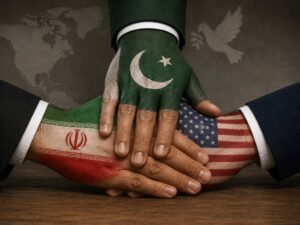
The United States and Iran are around 95% of the way to a nuclear and Hormuz deal, a senior US administration official has said, but a signing ceremony remains several days away as both sides continue to haggle over the precise wording of a framework that is otherwise largely agreed.
The official was emphatic that Iran would receive nothing upfront. No sanctions relief and no release of frozen funds would be granted before Tehran physically hands over its stockpile of enriched uranium. The US position, as the official described it, is straightforward: commitments not met mean Iran gets nothing.
The deal as envisioned would unfold in two stages. The first priority is reopening the Strait of Hormuz, restoring the free flow of commerce and giving the global economy what the official called breathing room. The second phase requires Iran to transfer its nuclear material, and only at that point would sanctions relief follow. The sequencing is deliberate, designed to extract a concrete and verifiable action before the US offers any tangible concession.
The official pushed back sharply on suggestions circulating in Iranian state-aligned media that Washington was prepared to hand over money without conditions. Those claims, the official said, originated with hardline elements of Iran’s government, specifically the Islamic Revolutionary Guard Corps, and amounted to propaganda intended to derail the negotiations rather than reflect their actual state.
Despite the optimism, the official was candid about the risks. The deal could still fall apart. Iran’s internal system moves slowly, and even minor changes to agreed language can take days to process. The US is not prepared to accept what the official described as a bad deal, and is willing to walk away if the terms are insufficient.
If an agreement is reached, the official said very senior US figures would participate in a formal signing ceremony. The broader strategic objective, he added, is ensuring Iran cannot develop a nuclear weapon over the long term. On the balance of power more broadly, the official noted that Iran’s ability to project force across the region is considerably more constrained than it was two months ago, with its ballistic missile production capacity described as having been substantially degraded.
—
The 95% figure offers markets a tangible measure of progress, but the insistence that no sanctions relief flows until nuclear material is physically transferred keeps the risk premium in place for now. A phased structure, with Hormuz reopening first and nuclear handover triggering relief second, means the strait could reopen before the broader deal is fully secured, offering an early but incomplete signal for energy prices. The explicit warning that the deal could still fall apart, and the acknowledgement that Iran’s internal decision-making is slow, means traders should not price out the possibility of a breakdown entirely.