


Key Takeaways
- AUD/NZD remains in a firm medium-term uptrend after hitting a fresh 13-year high, supported by widening Australian-New Zealand bond yield spreads and stronger RBA hawkishness versus the RBNZ.
- Markets expect the RBNZ to deliver a “hawkish hold” at 2.25%, but investors continue to price in a relatively more aggressive tightening path from the RBA amid persistent inflation pressures.
- Technical indicators suggest bullish momentum remains intact above 1.2130 support, with AUD/NZD poised for a potential breakout above 1.2250 toward 1.2310 and 1.2380/2400.
New Zealand’s central bank, the RBNZ, is set to announce its monetary policy decision tomorrow, Wednesday, 27 May 2026, at 10:00 SGT, followed by Governor Breman’s press conference an hour later.
Market participants expect the RBNZ to hold its official cash rate at 2.25%. The RBNZ has maintained a “wait-and-see” approach since ending its rate-cut cycle in November 2025, citing stagflation risks arising from the US-Iran conflict during its April meeting.
The RBNZ will also publish its latest official cash rate forecast track in Wednesday’s monetary policy release, with money markets fully pricing in a 25-basis-point hike in September and additional expectations for two more 25-bps hikes in Q4 2026.
As a result, markets are anticipating a “hawkish hold” from the RBNZ tomorrow, especially as New Zealand’s Q1 2026 core inflation rate remained elevated at 3.2% y/y, above the RBNZ’s long-term 1%-3% inflation target range.
RBNZ Lags RBA in Hawkish Monetary Policy Stance
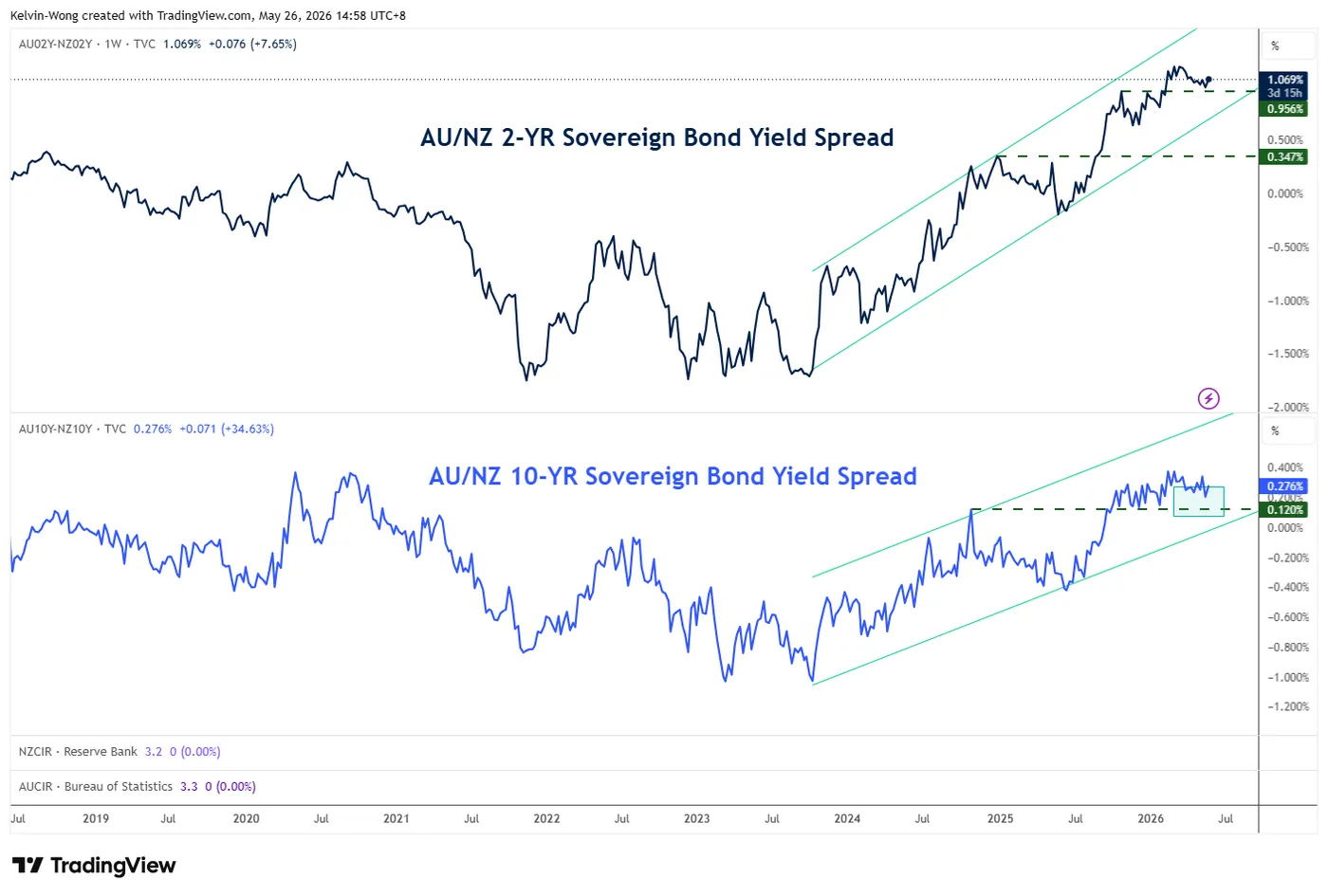
Fig. 1: Australia-New Zealand 2-year and 10-year sovereign bond yield trends as of 26 May 2026 (Source: TradingView).
Despite the RBNZ’s expected “hawkish hold” guidance, it continues to lag behind its antipodean counterpart, the RBA. So far in 2026, the RBA has raised rates three times for a cumulative 75 basis points.
Fixed-income markets continue to price in a more hawkish RBA relative to the RBNZ.
The 2-year bond yield spread, which is highly sensitive to shifts in monetary policy expectations, between Australian and New Zealand sovereign bonds has maintained a major uptrend since October 2023. Recent price action rebounded to 1.07% from 0.99% recorded during the week of 18 May 2026.
A similar trend is visible in the longer-term 10-year bond yield spread, which is more sensitive to inflation dynamics. The spread has remained resilient near 0.28%, trading close to a six-year high.
As a result, a further expansion in the yield premium of Australian sovereign bonds over New Zealand bonds is likely to generate additional upside pressure on the AUD/NZD cross.
Let’s now examine the medium-term, one-to-three-week trajectory for AUD/NZD from a technical analysis perspective.
AUD/NZD – Poised for a Bullish Breakout Above 1.2250
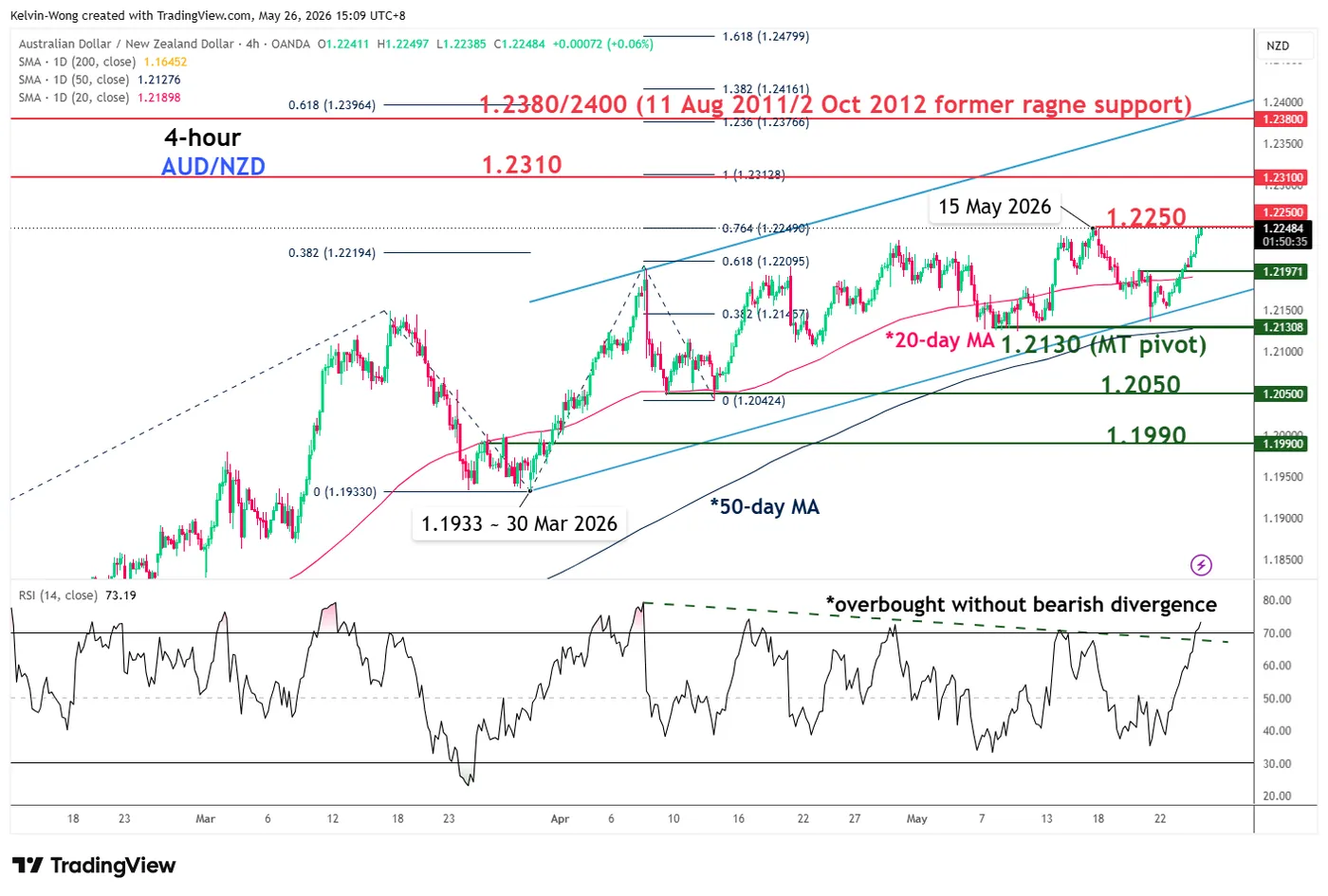
Fig. 2: AUD/NZD medium-term trend as of 26 May 2026 (Source: TradingView).
Trend bias: Bullish above the 1.2130 key medium-term pivotal support.
Resistances: 1.2250 (15 May 2026 minor swing high), 1.2310 (Fibonacci extension), and 1.2380/2400 (Fibonacci extension, ascending channel upper boundary, and former range support from August 2011 and October 2012).
Next supports: 1.2050 (9 April and 14 April 2026 swing lows), and 1.1990 (25 March and 31 March 2026 former minor range resistance).
Key Elements Supporting the Medium-Term Bullish Bias on AUD/NZD
- The price action of AUD/NZD has continued to trade above its 20-day and 50-day moving averages since 4 February 2026, suggesting that the medium-term uptrend remains intact.
- The 4-hour RSI momentum indicator has staged a bullish breakout above a key descending resistance and entered overbought territory above the 70 level without any bearish divergence signal. These observations suggest medium-term bullish momentum conditions remain intact.