


Market Overview
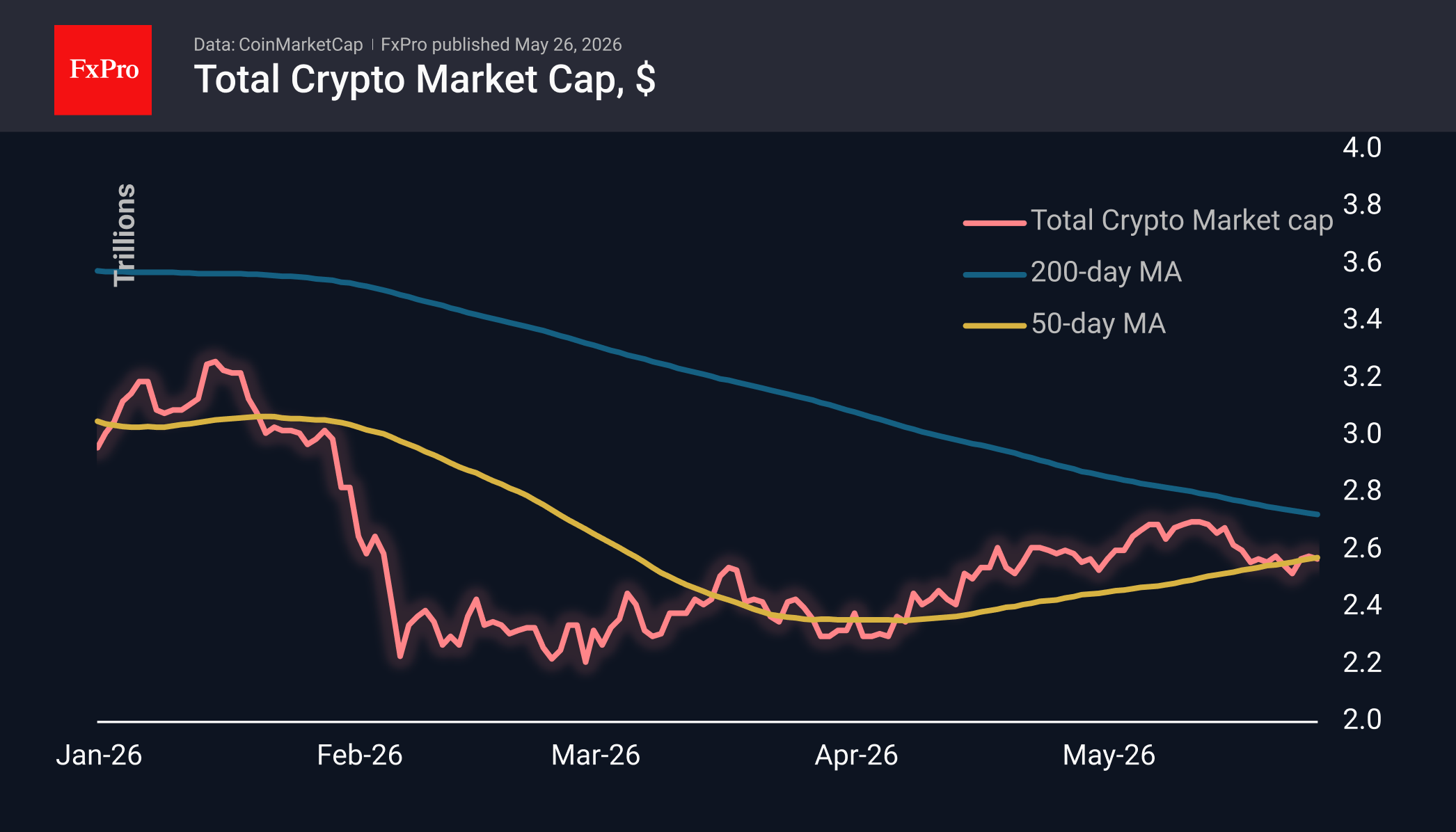
The crypto market remains stagnant, stuck at $2.57T and hovering around the 50-day moving average, awaiting further signals. The crypto market’s overall sideways movement looks like a juggling act for mid-tier altcoins: one after another takes the lead. Among the most popular coins over the last 24 hours are NEAR Protocol (+14%), The Graph (+5.6%) and Toncoin (+4.5%). The underperformers were Zcash (-5.9%), Dash (-4.1%) and Uniswap (-3.1%).
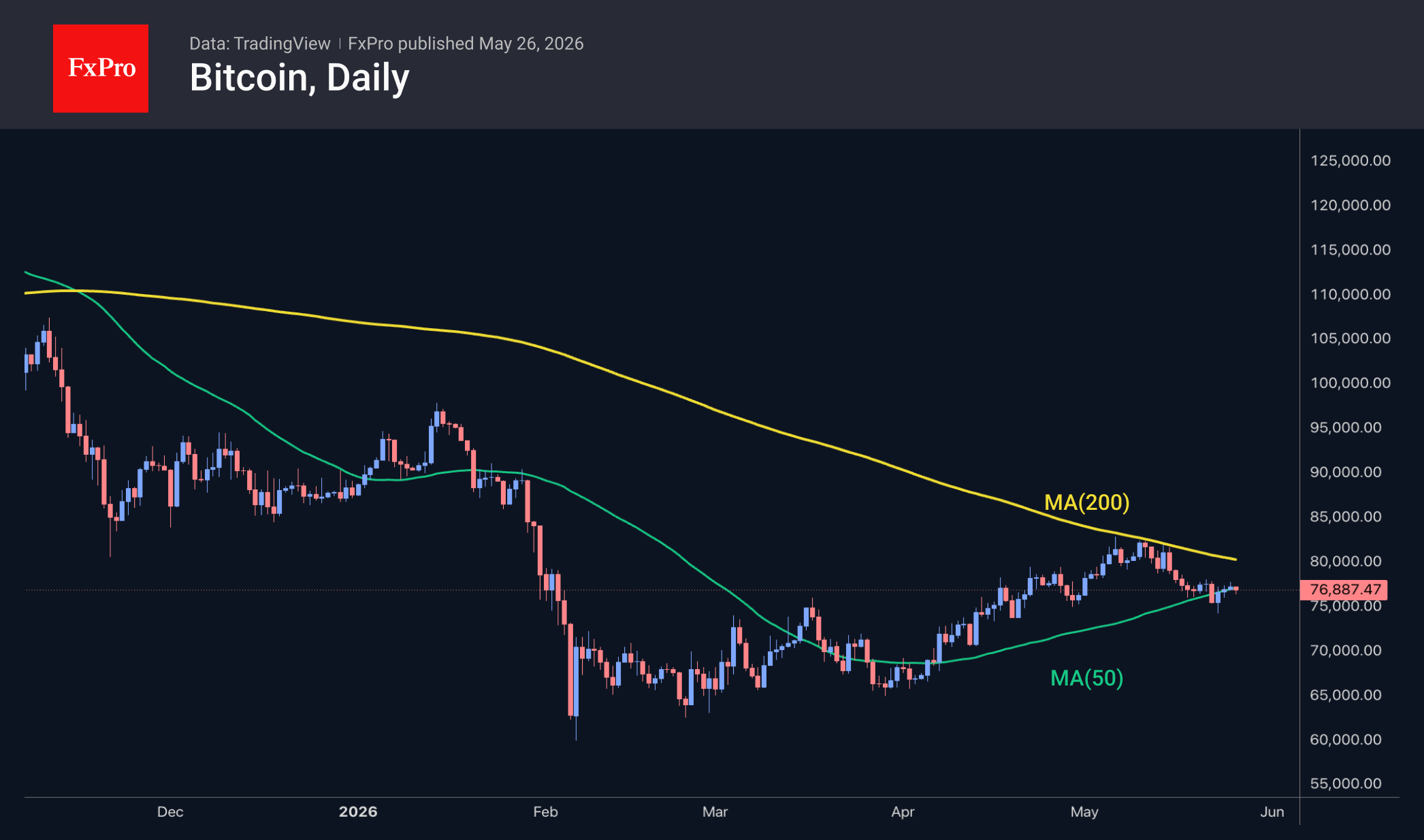
Bitcoin rose to $77.8K at the end of the day on Monday, but by the start of trading in Europe, it was trading $1,000 lower. The coin is finding support near the upward-sloping 50-day moving average. Earlier in May, the 200-day moving average briefly acted as strong resistance. If current trends continue, these lines will cross in just a couple of weeks, forming a golden cross, a strong bullish signal. But even before that, we may see a breakout of one of the key moving averages, the outcome of which will determine the trajectory of Bitcoin and the entire crypto market for the coming weeks.
News Background
Institutional investors have withdrawn $1.74 billion from Bitcoin ETFs over the past two weeks. Meanwhile, retail traders are increasing their leverage in anticipation of a reversal in the BTC price. In the past, such a combination has repeatedly resulted in severe waves of liquidations, according to a CryptoOnchain report.
Current Ethereum levels are suitable for building long-term positions, according to MN Trading founder Michael van de Poppe. In his view, the asset remains a crucial infrastructure element of the on-chain ecosystem, despite lagging the market in recent months due to macroeconomic factors.
The US Securities and Exchange Commission (SEC) has approved the listing of options on a Bitcoin index calculated based on BTC prices across multiple exchanges. This is the first such instrument on US stock exchanges currently; only options linked to the value of spot crypto ETF shares are traded there.
Strategy skipped its weekly Bitcoin purchase last week, instead buying back $1.5 billion of its own convertible bonds. The company’s founder, Michael Saylor, publicly revealed for the first time the tactic that Strategy has been using for five years.