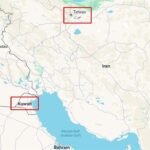


US and partner forces intercepted all Iranian ballistic missiles fired at Kuwait and Bahrain on June 2 and struck a military ground station on Qeshm Island in self-defense; no US personnel were harmed.
Summary:
Source: US Central Command
- US and partner forces defeated multiple Iranian ballistic missiles and drones launched across the Middle East on June 2, with all missiles failing to reach their intended targets
- Two missiles fired at Kuwait fell short or broke apart in flight; three missiles aimed at Bahrain were intercepted by US and Bahraini air defense forces
- US forces shot down three one-way attack drones launched by Iran targeting civilian vessels transiting regional waters
- CENTCOM conducted self-defense strikes on an Iranian military ground control station on Qeshm Island in response to the attempted attacks
- No US personnel were reported harmed; CENTCOM said forces remain on heightened alert during the ongoing ceasefire
US and partner forces successfully intercepted all Iranian ballistic missiles and drones launched across the Middle East on June 2, and struck an Iranian military facility on Qeshm Island in a self-defense response, US Central Command said in a statement.
Iran fired several ballistic missiles toward regional neighbours (Saudi report), but none reached their intended targets. Two missiles aimed at Kuwait fell short or broke apart before arrival, while three launched toward Bahrain were intercepted by a combination of US and Bahraini air defense systems. Moments before the missile launches, US forces shot down three one-way attack drones that Iran had directed at civilian vessels transiting regional waters, a category of target the US has repeatedly said it will defend.
CENTCOM’s counterstrike on a military ground control station on Qeshm Island marks a notable development in the conflict’s geometry. The US has previously focused its offensive operations on maritime interdiction and the naval blockade of Iranian ports, but Tuesday’s strike represents a direct hit on Iranian soil in response to attacks on commercial shipping, not solely on US military assets. That distinction matters: it signals Washington is prepared to use land-strike options to defend freedom of navigation, expanding the potential scope of exchanges.
The statement was careful to frame all actions as defensive and to note that no US personnel were harmed. CENTCOM also pointedly described its forces as remaining vigilant during the ongoing ceasefire, a formulation that acknowledges the nominal truce while making clear it does not constrain US responses to Iranian aggression.
The episode lands at a particularly delicate moment in diplomacy, with Washington and Tehran in intermittent contact over a proposed memorandum of understanding to formally halt hostilities. A sustained exchange of strikes and counterstrikes risks undermining whatever trust has been built, and raises the question of how many such incidents the ceasefire framework can absorb before it collapses entirely.
Yeah, Hormuz is still shut while the ‘ceasefire’ continues.
—
The successful intercept of all inbound missiles and drones will take some heat out of the immediate risk spike, but the episode confirms that Iran is actively prosecuting attacks across the Gulf despite the nominal ceasefire, raising the question of how long that framework can hold. The Qeshm Island counterstrike by CENTCOM introduces a new retaliatory dynamic: the US is now conducting offensive operations inside Iranian territory in response to drone attacks on civilian shipping, which widens the potential escalation ladder. Markets will note that defenses held this time, but the tempo of exchanges is accelerating.