
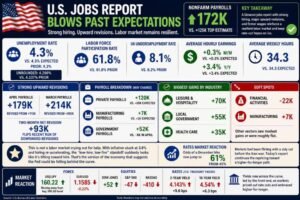
The USD is sharply higher following a much stronger-than-expected U.S. employment report. Nonfarm payrolls increased by 172K, well above the 85K forecast, while sizeable upward revisions added another 93K jobs to the prior two months. The unemployment rate held steady at 4.3%, average hourly earnings rose 0.3% on the month and 3.4% year-over-year, and the participation rate remained unchanged. Taken together, the report points to a labor market that remains resilient and is not showing signs of meaningful deterioration.
The USDJPY initially surged to its highest level since May 1, reaching 160.22, but remains below the next key upside target at 160.446, the March 30 swing high. Above that level, traders would look toward the 2026 high of 160.717 from April 30. However, gains above 160.00 continue to attract caution as traders remain sensitive to the risk of official intervention, even in the absence of any direct warnings from Japanese authorities.
After probing higher, the pair briefly pulled back before finding buyers once again. The 160.00 level remains a critical barometer for the pair. Staying above that threshold keeps buyers firmly in control. On the downside, the 100-hour moving average at 159.856 and the 200-hour moving average at 159.601 serve as important support levels. A move below those averages would weaken the bullish bias and shift the technical outlook more to the downside. Until then, the path of least resistance remains higher, with buyers maintaining the upper hand.
The EURUSD has moved lower and is now testing an important support zone between 1.1576 and 1.1587. The low price has reached 1.1584 so far, putting the pair near the lower end of that key swing area. A break below the floor at 1.1576, and more importantly, the ability to stay below that level, would likely increase bearish momentum and open the door for a deeper move to the downside.
From a technical perspective, the pair has already fallen below the trendlines highlighted on the hourly chart and is moving further away from its 100-hour moving average at 1.16225 and 200-hour moving average at 1.16287. Those moving averages now act as resistance and reinforce the bearish bias. While sellers remain in control, the next key test is whether they can force and sustain a break below 1.1576. Accomplishing that would strengthen the downside case and give sellers greater control of the short-term trend.
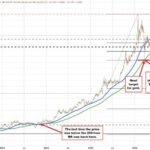
The GBPUSD remains under pressure as sellers regain control below key technical levels. After rallying earlier in the week, the pair once again found resistance near a confluence of overhead targets, including the 50% retracement of the move down from the May high at 1.34803 and the 100-day moving average at 1.34756. The inability to sustain momentum above those levels kept a lid on the upside and encouraged renewed selling interest.
Since then, the price has rotated lower and is now moving further away from the 100-hour and 200-hour moving averages, clustered near 1.3443. More importantly, the pair has slipped back below its 200-day moving average at 1.34195, a level that has acted as both support and resistance over recent weeks. The move back below that long-term barometer gives sellers another opportunity to strengthen their grip on the market.
With the price trading below the key hourly and daily moving averages, the technical bias has shifted back to the downside. The next downside targets come in near last week’s low at 1.33658 and the May 20 low at 1.33739. A move below those support levels would increase bearish momentum and open the door for a deeper decline.
For buyers to regain control, they would need to push the price back above the 200-day moving average and stay above. The price of the GBPUSD has traded below the 200 day MA 7 of 8 days but have bounced. Is this the catalyst to push the pair away from that MA now?
US yields are higher with the two-year now up nine basis points at 4.14%. The 10 year yield is up six basis points at 4.54%. US stocks are opening lower on concerns about higher rates.
Dow industrial average is up marginally. The S&P is down -0.71%, and the NASDAQ index is down about 1.10%