
Markets
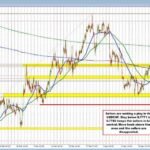
Markets today basically do what they got used to during the previous two months: waiting for the next batch of news headlines on the war between the US and Iran. Especially some more concrete news on the opening of the Strait of Hormuz (or the failure to do so) should help to make an estimate/guess on the impact on prices and activity in the short-to-medium term. Whatever the outcome of this process, this estimate will remain a complicated exercise, both for markets and central bankers. Even in case of a political solution/opening of the Strait in the ‘near future’, question will remain to what extent oil and other commodities will return and how quick this will go. Maybe/likely we have already passed the point where some further indirect and second round inflation effects have affected the economic chain anyway. In that scenario, (some) central banks still have to adjust policy, especially if the feared for deceleration in activity would turn out to be more modest then feared. For now this is all no more ‘than hypothetical thinking’. The US and Iran reportedly are considering a short term memorandum that aims to end hostilities and resolve the (mutual) blocking of the Strait of Hormuz. Other key issues including Iran’s nuclear program, will have to be addressed in talks over the next months. Markets yesterday saw enough signs (especially from President Trump’s communication) to anticipate a positive outcome. Inflation and other risk premia declined substantially. This gain is easily maintained, even extended today, as the waiting game continues. Brent oil tries a new attempt to settle below the $100 p/b level (currently $97). EMU swap yields still decline between 4 (2-y) and 2.5 (30-y) bps. Markets have scaled back ECB rate hike expectations. A next step is only fully discounted for July (70% June) and markets see only slightly more than one additional step toward the end of the year. US yields in a similar move also ease between 3 bps (2-y) and 1 bp (30-y). Money markets still hold a highly agnostic view whether the next step of the Fed should be a rate hike or a rate cut. (US) data in the current context mostly have limited market impact. Still preliminary US Q1 Unit Labour Costs eased more than expected (2.3% ann from 4.6%). At the same time, weekly jobless claims remained very low. (200k). The focus now turns to tomorrow’s April US payrolls report. UK markets for now join the broader ‘easing’ rally (yield declines of 3.5-2.5 bps) as investors look out for any potential impact of today’s regional election on the position of PM Starmer (and on fiscal policy). Both US and EMU equity indices mostly hold yesterday’s gains, with limited, mixed moves today. The dollar softens further. Some technical support levels are nearby, but haven’t really been challenged yet (DXY at 97.85 with recent lows near 97.63; EUR/USD at 1.175 with wartime top at 1.1849). Minimal moves intraday in the ERU/GBP cross rate too (0.864)
News & Views
The Norwegian central bank surprised with a 25 bps rate hike to 4.25% today. Although it stated in March that such a move would be appropriate “at one of the forthcoming” meetings, not everyone assumed that it would be already be at the next one this month. Underpinning the decision was high and above-target inflation, rising energy prices and commodity prices in general as well as elevated wage growth all the while the economy operates near capacity with higher energy prices at least partially offsetting its negative economic impact. “High inflation over time can lead firms and households to plan for persistently high inflation. It may then become more difficult to bring inflation down again.” The Norges Bank responded by tightening policy further and stuck to its March guidance that projected rates going as high as 4.5% this year. Norwegian swap yields briefly rallied several bps, going against the broader trend, but failed to hold on to those gains. The NOK does appreciate to EUR/NOK 10.85.
Sweden’s policy rate, by contrast, was kept at 1.75% and is expected to remain there over the coming period. The Riksbank offered a dual risk assessment. The initial energy-related inflation could prompt a broad and persistent rise in other goods and services, warranting a potential monetary tightening. Risks of that happening have increased compared to the March meeting. At the same time, an already sluggish economy is performing weaker than expected and inflation came in well below expectations. Yesterday’s headline number eased to 0.8%, the lowest since December 2020 while the core gauge showed prices stagnating for the first time in three decades. The Riksbank said this means “there is scope to wait until there is a clearer picture of the effects of the war and the supply shocks it entails.” The Swedish krone shrugged at the decision with EUR/SEK trading little changed around 10.83.