
Gold is trading at around 4,550 USD per ounce on Thursday, remaining close to its monthly lows. Pressure on the metal continues to build as rising energy prices fuel inflation expectations and increase the likelihood of tighter monetary policy from the world’s major central banks.
Donald Trump stated that the US will maintain its naval blockade of Iran until a nuclear agreement is reached. Tehran responded by accusing Washington of using economic restrictions and internal destabilisation as tools of political pressure.
The prolonged conflict in the Middle East, coupled with the effective closure of the Strait of Hormuz, continues to unsettle global markets. Investors are scaling back expectations for interest rate cuts this year and are beginning to price in the possibility of rate hikes in 2027.
As widely expected, the Federal Reserve left interest rates unchanged. However, several policymakers openly dissented, underscoring growing divisions within the Fed amid heightened uncertainty.
Technical Analysis
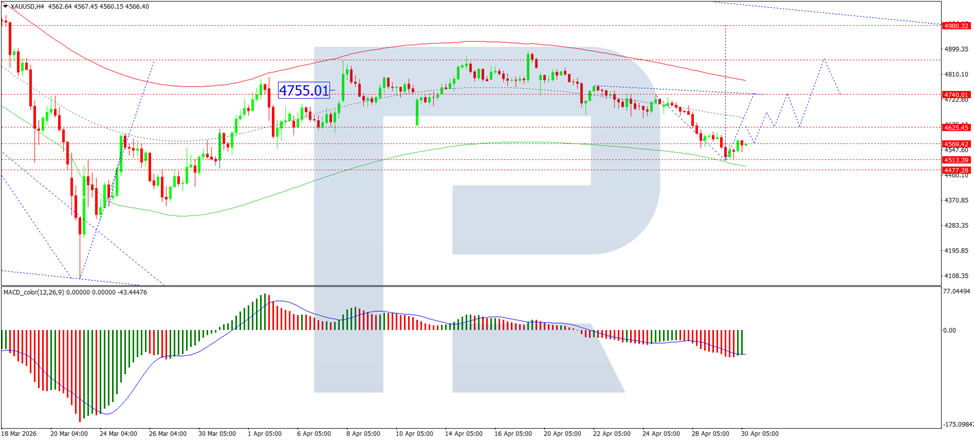
On the H4 chart, XAU/USD is trading within a consolidation range above the 4,515 USD level. A move higher could open the way for a corrective rebound towards 4,767 USD. On the downside, a further decline towards 4,500 USD is possible. The MACD indicator supports the current recovery scenario, with the signal line below the zero mark but pointing firmly upwards, indicating strengthening bullish momentum.
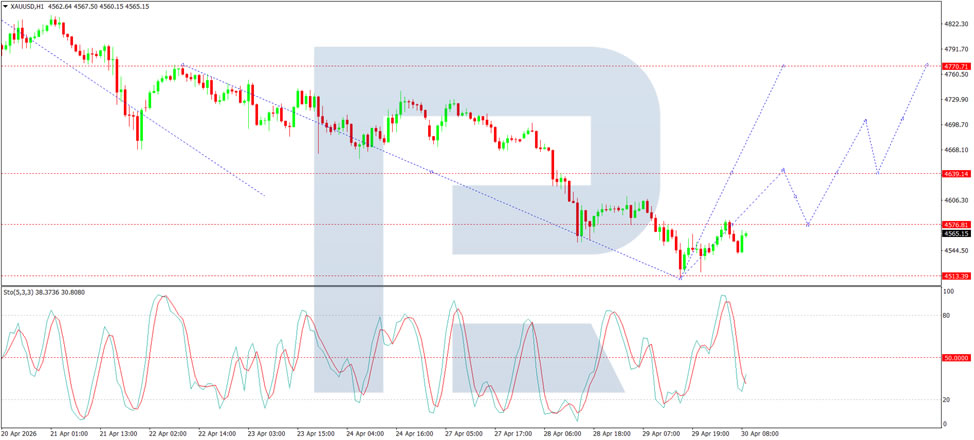
On the H1 chart, the market has broken above the 4,560 USD level and is continuing its upward move towards 4,650 USD. A short-term pullback towards 4,560 USD remains possible as a retest from above, after which the price may resume its advance towards 4,770 USD. The Stochastic oscillator supports this view, with the signal line rising steadily towards 80, suggesting growing upside momentum.
Conclusion
Gold remains under pressure from persistent inflation concerns and hawkish central bank expectations, but signs of short-term stabilisation are emerging. While geopolitical tensions continue to support safe-haven demand, the broader direction for gold will depend on whether inflation fears or expectations of tighter monetary policy prove to be the stronger market driver.