

Market Update: Oil Prices Retreat as Geopolitical Tensions Ease
Despite ongoing conflict in Lebanon and the complexities of regional negotiations, the oil market continues its downward trend. While recent headlines initially sparked concerns of a supply disruption, crude oil has failed to maintain its upward momentum. Even with the postponement of the planned meetings in Switzerland, the core progress toward a U.S.-Iran Memorandum of Understanding (MOU) remains a focal point for traders. Iran’s negotiators have signaled a willingness to pursue steps toward a lasting deal, contributing to a sense that a diplomatic path remains open despite intermittent rhetoric to the contrary.
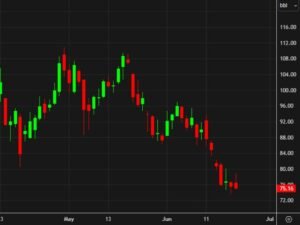
The price action reflects this shift in sentiment. After an early rise to as high as $78.96, crude prices quickly reversed, currently trading around $74.81. Market participants are now closely watching Friday’s intraday low of $73.58. A break below this level would mark the lowest price point since early March, effectively erasing the entirety of the “war premium” built into the market over the last several months.
This selloff is particularly noteworthy given the significant volume of oil removed from the market over the last 100 days. Analysts are increasingly identifying three primary “swing factors” that have stabilized the market:
1. Strategic reserve releases from the United States, Japan, and other nations.
2. A significant reduction in Chinese imports—down by approximately 4 million barrels per day—as the country utilizes its own domestic supplies.
3. A drawdown of commercial inventories based on the expectation of an eventual resolution to the conflict.
However, these factors present a dual-sided risk. As geopolitical tensions eventually subside, both government and commercial entities will likely need to rebuild their reserves. This rebuilding process is expected to introduce a new floor for the market, potentially keeping crude prices tight in the long term.
While a price floor between $70 and $75 is anticipated, current price action is testing that theory. If China returns to the market as a significant buyer, the tide could turn quickly; however, their opaque buying strategies make timing difficult to predict. From a technical perspective, there is little support below Friday’s low until the $70 mark, with pre-war levels near $67 serving as the next major psychological barrier.
The broader concern for the industry is what these low prices imply about global demand. If oil returns to pre-war levels despite one of the most significant supply disruptions in history, it may suggest that the global economy has become increasingly resilient to supply shocks, potentially signaling a fundamental shift in the long-term value of crude oil.