

Market Outlook: US Dollar Strengthens Amid Pivotal PMI Data and Geopolitical Uncertainty
As the global financial markets head into a new week, investor attention is firmly fixed on the upcoming release of the June flash Purchasing Managers’ Indices (PMIs) from S&P Global. Scheduled for release on Tuesday at 13:45 GMT, these surveys of private-sector executives serve as a critical early barometer for the health of the United States economy.
Economic Expansion Projected for June
Current market consensus suggests that US business activity remains firmly in expansion territory (indicated by a reading above 50). The S&P Global Services PMI is anticipated to rise to 51, up from 50.7 in May. Conversely, Manufacturing output is expected to see a slight cooling, with a projected print of 54.7 compared to the previous month’s 55.1. While these minor fluctuations are expected, the broader takeaway is that the US economy continues to grow despite tightening financial conditions.
The manufacturing data, in particular, remains a leading indicator for GDP, employment, and inflation. Investors will be looking closely at the sub-components of these reports, as any uptick in inflation-related indices could fuel further speculation regarding interest rate hikes.
A Paradigm Shift at the Federal Reserve
The impact of this week’s data may be magnified by a significant shift in communication from the Federal Reserve. Under the leadership of Chair Kevin Warsh, the FOMC is moving away from traditional “forward guidance” in favor of a “data-dependent” approach. By reducing the length of official statements and refraining from including personal views in the dot plot, the Fed has signaled that raw economic data—like the upcoming PMIs—will now carry more weight in the market’s eyes.
Despite the move away from explicit guidance, the hawkish tone of recent meetings has bolstered the Greenback. With half of the voting members now projecting a rate hike before the end of the year, the US Dollar (USD) maintains a position of strength.
Geopolitical Tensions: The US-Iran MOU and the Strait of Hormuz
The US Dollar is also benefiting from safe-haven demand driven by renewed volatility in the Middle East. While optimism surged last week following a Memorandum of Understanding (MOU) between the US and Iran to extend a truce and reopen the Strait of Hormuz, that confidence was short-lived. Iranian authorities recently suggested a potential re-closure of the critical sea passage, injecting fresh uncertainty into global energy markets.
While negotiations continue and navigation remains open for now, the fading optimism regarding a long-term diplomatic breakthrough has supported the USD against its major peers.
Technical Outlook: EUR/USD Under Pressure
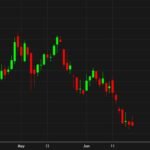
From a technical perspective, the EUR/USD pair remains in a precarious position. The pair is currently trading just above the March 2026 low of 1.1411. Despite showing signs of being oversold, bearish momentum remains dominant, with the pair trading well below its 20-day Simple Moving Average (SMA) of 1.1560.
Analysts suggest that a break below 1.1411 could expose the 1.1360 price zone, with a further psychological floor at 1.1300. On the upside, any recovery attempts are likely to meet stiff resistance at 1.1470 and 1.1550.
Summary for Investors
The combination of a hawkish Federal Reserve, steady domestic economic expansion, and geopolitical friction in the Middle East continues to provide a tailwind for the US Dollar. Traders should prepare for volatility on Tuesday; while strong PMI figures will likely reinforce the USD’s advance, any unexpected weakness could provide a temporary reprieve for the Euro and other major currencies.