The EUR/USD pair remains at a critical juncture as markets digest a complex tapestry of United States economic data that has introduced fresh volatility into the greenback. While recent domestic reports from the U.S. have provided a mixed signal regarding the health of the economy, the resulting fluctuations in the U.S. Dollar Index (DXY) have created distinct ripples across the major currency pairs, forcing investors to reassess the path of monetary policy.
For traders, the current environment necessitates a high level of vigilance. The interplay between conflicting indicators—such as robust housing starts contrasted with underwhelming industrial output—complicates the Federal Reserve’s narrative. As the market attempts to find its footing, identifying whether this price action represents a temporary correction or a significant shift in trend requires a granular focus on how sentiment data interacts with core industrial performance.
Key Market Drivers
The fundamental landscape is currently defined by a tug-of-war between disparate economic prints. On one hand, the U.S. housing sector exhibited surprising resilience, with housing starts climbing to an annualized rate of 1.43 million, comfortably outpacing the 1.31 million consensus. This suggests that certain pockets of the economy retain momentum despite high interest rates. Conversely, a decline in building permits to 1.37 million and a stagnant 0.1% increase in industrial production highlight the persistent constraints facing manufacturers and developers.
Beyond the raw data, the narrative from Federal Reserve leadership continues to emphasize a cautious approach to inflation. Recent commentary highlighted that price pressures remain broad-based, compounded by structural headwinds including energy costs, insurance premiums, and the high-capital demands of expanding artificial intelligence infrastructure. This hawkish undertone remains a primary anchor for the dollar, acting as a potential ceiling for pairs like EUR/USD whenever signs of economic cooling fail to materialize in the services or sentiment sectors.
Trader Takeaways
- Monitor the divergence between sentiment indices and hard industrial data; sentiment is currently signaling relative resilience that may support the dollar in the short term.
- Prioritize liquidity management during data release windows, as the market is reacting with heightened sensitivity to misses in industrial prints.
- Observe the correlation between U.S. yield shifts and currency movements; if the Fed maintains its cautious stance despite cooling activity, expect dollar support to persist.
- Watch for the impact of sectoral bottlenecks, such as energy and supply-chain pressures, which can indirectly influence the inflation outlook and subsequently EUR/USD valuation.
- Avoid over-committing to directional biases until price action confirms a breach of current moving average clusters.
Levels and Signals to Watch
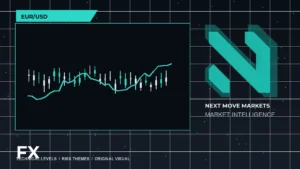
In the current consolidation phase, the proximity of key moving averages serves as the primary gauge for short-term momentum. Traders should track the interaction between immediate resistance clusters and the structural support provided by longer-period moving averages. If the price fails to break through overhead resistance, it may signal that current bullish sentiment is exhausted, potentially inviting a retest of lower support thresholds.
Invalidation of the current neutral bias will require a decisive break outside of established horizontal barriers. A push above the immediate resistance ceiling would suggest a shift in momentum toward the upside, whereas a failure to maintain support levels at the 100-period threshold would indicate that sellers have regained control. Risk management should remain stringent, as the RSI hovering near neutral territory implies that a breakout could be sudden and fueled by rapid position squaring.
Cross-Asset Context
The current behavior of the dollar is not occurring in a vacuum. As the U.S. currency faces a mixed reaction to economic data, other asset classes are adjusting their risk premiums accordingly. The interplay between the DXY and sentiment-sensitive assets remains pivotal; when industrial production data misses expectations, it often coincides with increased demand for safety, affecting not only EUR/USD but also broader equity market sentiment. Furthermore, the focus on AI infrastructure costs mentioned by Fed officials suggests that the technology sector remains a key nexus between macroeconomic policy and equity performance, indirectly influencing global risk appetite and forex flows.