

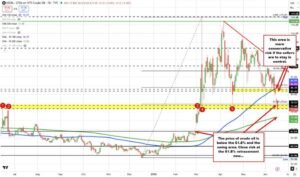
The price of crude oil continues to slide, with WTI now trading around the $77 level, down roughly $3.70, or 4.6%, on the day. The decline extends a sharp three-day selloff that has seen prices fall 5.9%, 2.5%, and now another 4.6%, as traders continue to unwind the geopolitical risk premium that had been built into the market during the U.S.-Iran conflict.
From a technical perspective, the bearish case has strengthened. The price has broken below a key swing area between $77.44 and $78.97 and is also trading beneath the 61.8% retracement level at $79.62 of the rally from the December 2025 low to the March high. That zone, up to $79.62, now serves as the first important resistance area and a close risk level for sellers. As long as the price remains below that level, the downside bias remains firmly in place.
For traders looking for a more conservative risk parameter, the next major resistance zone comes in between $85.45 and $86.89. That area includes a key swing zone as well as the 100-day moving average at $86.89. A move back above that cluster would force a reassessment of the bearish outlook, but for now the sellers remain firmly in control.
If downside momentum persists, attention will increasingly shift toward the 200-day moving average at $73.48. Crude oil has traded above that moving average since mid-February, making it a critical longer-term support level. A break and sustained move below it would increase the bearish bias further and could open the door toward the February 27 closing level of $67.04, which was the last trading day before the war began.
At the gasoline pump, prices have been slower to respond. According to AAA, the national average price for regular gasoline remains above $4.00 per gallon at $4.04. However, that is well below the May peak of $4.56 per gallon reached as crude oil surged during the conflict.
For comparison:
- February 27, 2026 (pre-war): $2.98 per gallon
- January 20, 2025 (end of the Biden administration): $3.12 per gallon
- May 2026 peak: $4.56 per gallon
- Current AAA national average: $4.04 per gallon
While the recent decline in crude oil prices should continue to ease pressure at the pump, gasoline prices would still need to fall by roughly $1.00 per gallon to return to the levels seen before the conflict and around the end of the Biden administration. That leaves room for President Trump to point to lower energy costs if the decline in crude oil prices continues and those savings are ultimately passed on to consumers