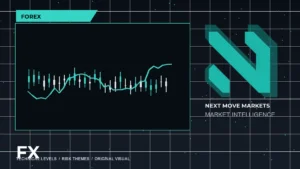
The EUR/GBP cross-currency pair is currently navigating a delicate recovery phase, with price action signaling a modest intraday upward bias. Traders are closely monitoring this rebound as the market attempts to consolidate following a period of sustained downward pressure. Understanding the structural boundaries of this movement is essential for those balancing positions between the Euro and the British Pound.
Market participants should pay close attention to this pair, as it serves as a critical barometer for relative central bank sentiment and European economic health. As the pair tests significant moving averages, the ability to either reclaim key historical resistance levels or succumb to renewed selling pressure will dictate the broader trend, impacting portfolios focused on cross-Atlantic liquidity flows.
Key Market Drivers
The fundamental landscape for the Euro versus the Pound remains characterized by a lack of strong, clear-cut momentum. While the current price bounce from the 0.8453 floor suggests a degree of technical support, the macroeconomic backdrop keeps the outlook largely neutral. Liquidity appears concentrated around these recent lows, with the market searching for a catalyst to break the current stasis.
The primary hurdle remains a dense zone of resistance extending toward the 0.8610 level. This area acts as a structural ceiling, representing a confluence where prior support has been flipped to resistance. Without a significant shift in the ECB-BoE policy spread or a major surprise in regional data, the market is likely to remain tethered by these technical constraints. For investors, the focus is not just on the immediate price action, but on the validity of these established barriers that prevent a breakout in either direction.
Trader Takeaways
- Respect the range: The market is effectively trapped between 0.8453 and 0.8610. Avoid over-leveraging until a decisive breach of either extremity is confirmed by volume.
- Monitor the 55-day EMA: Use the 0.8589 level as a short-term benchmark for momentum; a failure to sustain moves above this average suggests that the broader downward trend remains intact.
- Prioritize risk management: Given the neutral long-term outlook, stop-loss orders should be placed tight to either side of the primary support/resistance levels to mitigate whip-saw risk.
- Watch for retests: Should the price dip below the 0.8513 minor support level, it serves as an early warning signal that a re-test of the 0.8453 cycle low is imminent.
- Avoid trend-chasing: Until the 0.8610 barrier is cleared on a closing basis, long positions should be treated as tactical bounces rather than a structural change in the market environment.
Levels and Signals to Watch
The technical structure for the pair is defined by clearly demarcated zones. On the upside, the 55-day EMA at 0.8589 is the immediate focal point, serving as a gateway to the more significant resistance zone starting at 0.8610. A failure to consolidate above this EMA will likely lead to a prompt rejection and a return to base. Conversely, support is anchored at 0.8453. If this level is breached with conviction, the path of least resistance would shift lower, potentially invalidating the recent recovery attempts. Momentum oscillators currently suggest a neutral posture, cautioning traders against assuming that this rebound has the legs to transition into a sustained rally without a significant shift in volume or news-driven volatility.
Cross-Asset Context
In the broader foreign exchange landscape, the movement of the EUR/GBP pair is intrinsically tied to the performance of the DXY (US Dollar Index) and broader European macro sentiment. While this pair specifically measures the Euro against the Pound, its relative strength is often influenced by how both currencies respond to shifts in the US Dollar’s dominance. When the DXY experiences high volatility, correlations between the EUR and GBP can tighten, often leading to compressed ranges in the cross-pair. Investors tracking commodities, such as oil, should also note that energy-related fiscal pressures in the Eurozone can exert idiosyncratic pressure on the Euro, adding an extra layer of complexity to the 0.8610 resistance ceiling.
Risk Context
The current market environment demands a high level of vigilance. The primary risk for traders is an over-reliance on technical indicators that appear to show stability while the underlying fundamental drivers remain ambiguous. The move from the 0.8221 low up to 0.8863, which stalled near the 38.2% Fibonacci retracement level, serves as a sobering reminder that long-term trends can reverse abruptly. Traders should avoid the temptation to view the current bounce as a guaranteed reversal. Maintaining a balanced view—and acknowledging that the market may remain trapped in a neutral range for an extended period—is the most prudent approach to managing exposure in the current climate.
Editorial note: This article is market intelligence for educational purposes and is not investment advice.
Next Move Markets desk view
For active traders, this brief should be read through the lens of currency markets rather than as a standalone headline. The key question is whether the theme behind EUR/GBP Analysis: Daily Market Trends and Key Support Levels to Watch can influence positioning beyond the first reaction. That means watching central-bank expectations, yield differentials, dollar momentum and risk appetite together, not in isolation.
A richer trading read comes from separating the catalyst from confirmation. The catalyst explains why markets are paying attention; confirmation comes from price action, liquidity and cross-asset behavior after the headline is digested. If those signals do not align, traders should treat the move as fragile and keep risk tighter.
What traders should watch next
- Whether the move is confirmed by the U.S. dollar index and short-term rate expectations.
- How London and New York liquidity react once the initial headline risk is absorbed.
- Whether price action respects the latest support and resistance zones instead of fading immediately.
- Any follow-up comments from central-bank officials or data releases that change the rate path.
Risk context
This article is a market-intelligence brief, not a trade recommendation. Before acting on the theme, traders should define invalidation, position size and the time horizon of the setup. The same headline can support a short-term reaction and still fail as a multi-session trend if liquidity, policy expectations or broader sentiment move the other way.
Scenario map
The base case is that traders keep this theme on the radar while waiting for confirmation from central-bank expectations, yield differentials, dollar momentum and risk appetite. A stronger continuation scenario requires follow-through after the first reaction, preferably with related assets moving in the same direction. A failure scenario develops if the headline is quickly absorbed, volatility fades and price returns inside the previous range.
For currency markets, the most useful approach is to compare the article theme with live market behavior. If the market confirms the narrative, pullbacks can become more constructive. If the market rejects it, the headline becomes background noise rather than a trading driver.
Execution discipline
- Define the level first: traders should know where the idea is invalidated before thinking about upside or downside.
- Separate news from setup: EUR/GBP Analysis: Daily Market Trends and Key Support Levels to Watch may explain attention, but entry quality still depends on timing, liquidity and risk/reward.
- Watch confirmation: a clean move usually appears across related markets, not only in one isolated instrument.
- Control exposure: if volatility expands, smaller position sizing can be more professional than chasing the headline.
Next Move Markets treats this kind of brief as a starting point for preparation: identify the driver, map the scenarios, then wait for the market to prove which path is actually being priced.