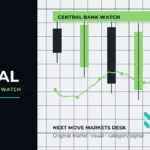
The EUR/JPY pair has recently extended its recovery phase, successfully breaching the 186.30 resistance level. This movement signals a continuation of the bullish momentum initiated at 182.10, keeping the pair poised for a potential retest of its recent highs. For active traders, the current price action demands a balanced approach, as the market navigates between short-term corrective strength and established structural resistance zones.
Understanding the distinction between this recovery and the primary trend is essential for risk management. While the recent breakout provides a tactical long opportunity, the market is approaching levels where previous selling pressure was significant. Traders should pay close attention to how the pair interacts with these historical ceilings, as the outcome will likely dictate the next medium-term directional bias.
Key Market Drivers
The pair is currently caught in a complex interplay between immediate corrective upside and a broader, long-standing historical uptrend. The recent push through 186.30 represents a consolidation of gains, yet the market remains wary of the resistance cluster near the 187.93 mark. Fundamental participants are watching for signs of exhaustion at these elevated levels. Liquidity in this pair remains sensitive to shifts in central bank rhetoric and shifting yield differentials, which continue to act as the primary engines for volatility in the EUR/JPY cross.
Trader Takeaways
- The current bias remains tilted to the upside, targeting a move toward the 187.93 resistance, provided momentum holds above key support.
- The 185.32 level acts as the primary threshold for intraday stability; a decline below this point would signal a transition to a neutral market state.
- Medium-term structural integrity remains anchored to the 55-week exponential moving average, currently situated at 180.17.
- A definitive break and hold above 187.93 would be required to suggest the corrective phase has evolved into a more substantial leg of the primary uptrend.
- Failure to maintain the 55-week EMA would be a major technical warning, potentially opening the door for a deeper correction toward the 175.41 support level.
Levels and Signals to Watch
For those monitoring execution, the 187.93 level stands out as a critical pivot. As this is viewed as a corrective recovery, traders should anticipate increased volatility and potential selling interest as the price tests this ceiling. Confirmation of continued upside requires a clean break above this resistance. Conversely, if momentum falters, the 185.32 support level must hold to prevent a shift in the intraday outlook. Traders looking for early warnings of a breakdown should monitor the 180.17 level (the 55-week EMA); a sustained close below this indicator would negate the bullish long-term narrative and likely trigger a trend reversal, targeting 175.41 and lower.
Cross-Asset Context
EUR/JPY frequently serves as a barometer for broader risk sentiment. When the pair finds upward traction, it often reflects a carry-trade environment where investors favor higher-yielding assets against the Japanese yen. However, any unexpected volatility in global equity markets or sharp shifts in regional interest rate policies can quickly drain liquidity from this pair, leading to rapid re-pricings. Traders should keep a watchful eye on major sovereign debt yields, as these often provide the necessary lead time for identifying shifts in the Yen’s strength.
Risk Context
Market participants must be cautious of interpreting the recent strength as a signal for aggressive, long-term trend continuation without confirmation. The current recovery is technically classified as a corrective move, and the presence of significant resistance at 187.93 increases the probability of false breakouts or rapid reversals. Overconfidence in the ongoing uptrend could prove costly if the market fails to clear the upper resistance band. Always maintain strict invalidation points, particularly near the 180.17 weekly EMA, as this remains the primary line of defense for the longer-term bullish structure. Relying on fixed price levels alone is dangerous; always cross-reference these with current volume and prevailing market sentiment.
Editorial note: This article is market intelligence for educational purposes and is not investment advice.
Next Move Markets desk view
For active traders, this brief should be read through the lens of global markets rather than as a standalone headline. The key question is whether the theme behind EUR/JPY Weekly Forecast: Key Technical Levels and Trends to Watch can influence positioning beyond the first reaction. That means watching liquidity, macro data, sentiment, positioning and cross-asset confirmation together, not in isolation.
A richer trading read comes from separating the catalyst from confirmation. The catalyst explains why markets are paying attention; confirmation comes from price action, liquidity and cross-asset behavior after the headline is digested. If those signals do not align, traders should treat the move as fragile and keep risk tighter.
What traders should watch next
- Whether price action confirms the headline after the first reaction has passed.
- How related markets respond, because isolated moves are easier to reverse.
- Any follow-up data or official comment that changes the original market assumption.
- Volatility and liquidity conditions, which should guide risk size before direction.
Risk context
This article is a market-intelligence brief, not a trade recommendation. Before acting on the theme, traders should define invalidation, position size and the time horizon of the setup. The same headline can support a short-term reaction and still fail as a multi-session trend if liquidity, policy expectations or broader sentiment move the other way.
Scenario map
The base case is that traders keep this theme on the radar while waiting for confirmation from liquidity, macro data, sentiment, positioning and cross-asset confirmation. A stronger continuation scenario requires follow-through after the first reaction, preferably with related assets moving in the same direction. A failure scenario develops if the headline is quickly absorbed, volatility fades and price returns inside the previous range.
For global markets, the most useful approach is to compare the article theme with live market behavior. If the market confirms the narrative, pullbacks can become more constructive. If the market rejects it, the headline becomes background noise rather than a trading driver.
Execution discipline
- Define the level first: traders should know where the idea is invalidated before thinking about upside or downside.
- Separate news from setup: EUR/JPY Weekly Forecast: Key Technical Levels and Trends to Watch may explain attention, but entry quality still depends on timing, liquidity and risk/reward.
- Watch confirmation: a clean move usually appears across related markets, not only in one isolated instrument.
- Control exposure: if volatility expands, smaller position sizing can be more professional than chasing the headline.
Next Move Markets treats this kind of brief as a starting point for preparation: identify the driver, map the scenarios, then wait for the market to prove which path is actually being priced.