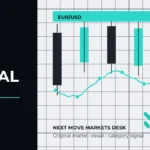
The EUR/USD pair is currently locked in a critical technical tug-of-war, with price action hovering around key hourly moving averages. Recent sessions have seen the pair test these institutional benchmarks, triggering a defensive bounce that highlights the ongoing struggle between supply and demand zones in the short term.
For active traders, these inflection points are vital indicators of sentiment shifts. Monitoring how the pair interacts with these moving average clusters is essential for gauging whether the current consolidation will lead to a breakout or a sustained return to bearish dominance. Recognizing these technical boundaries is the first step in constructing a disciplined risk-management strategy for the session ahead.
Key Market Drivers
Market participants are currently parsing technical support levels as the primary catalyst for short-term price movement. The interaction between the 100-hour and 200-hour moving averages suggests that liquidity is concentrated near these zones, forcing traders to choose between range-bound strategies or directional trend plays. The lack of a clear directional catalyst beyond these technical anchors keeps the market sensitive to minor fluctuations in volume as both bulls and bears fight for dominance of the current hourly structure.
Trader Takeaways
- Monitor the 1.1423 level, which serves as the current 200-hour moving average, for signs of sustained support or breakdown.
- Observe the 1.1417 mark representing the 100-hour moving average; this area acts as a secondary defensive line for bullish sentiment.
- Watch the 1.1462 level, identifying it as the 38.2% Fibonacci retracement that successfully capped upside momentum during earlier trading.
- Avoid over-leveraging while the price remains compressed between these moving averages to prevent being caught in “whipsaw” volatility.
- Look for a definitive close below the 100-hour and 200-hour moving averages as a signal that the short-term bias has shifted back to the downside.
Levels and Signals to Watch
The immediate technical landscape is dominated by the 1.1423 (200-hour MA) and 1.1417 (100-hour MA) confluence. These levels provide a clear invalidation zone for those looking to capitalize on the recent bounce. A clean, high-volume break below 1.1417 would likely invite further selling pressure, confirming that the bears have reclaimed control. Conversely, upside attempts must overcome the 1.1462 resistance. Should the pair clear this 38.2% Fibonacci level, it could suggest a shift toward short-term momentum recovery, potentially clearing the path for further testing of higher liquidity pools.
Cross-Asset Context
While the EUR/USD pair remains focused on its internal technical structure, traders should keep an eye on the broader DXY index. Correlation remains high; any significant movement in the dollar index will likely accelerate the breakout from the current hourly congestion. Additionally, shifts in global rate expectations often underpin these currency pairs, so checking the performance of major sovereign debt yields is recommended for context on whether the current EUR/USD bounce is fundamentally supported or merely a technical pause in a larger trend.
Risk Context
Next Move Markets cautions that technical indicators, while useful for identifying potential support and resistance, are not predictive of future outcomes. The current consolidation between 1.1417 and 1.1462 is susceptible to sudden, high-volatility events triggered by macro news or shifts in market liquidity. Traders should avoid the temptation of overconfidence when price approaches these averages. Always ensure that stop-loss orders are adjusted for current volatility, and be prepared for the possibility that moving averages may be “sliced through” rather than acting as a hard wall during periods of heavy volume.
Editorial note: This article is market intelligence for educational purposes and is not investment advice.
Next Move Markets desk view
For active traders, this brief should be read through the lens of currency markets rather than as a standalone headline. The key question is whether the theme behind EURUSD Bounces off 200-Hour Moving Average Amidst Market Consolidation can influence positioning beyond the first reaction. That means watching central-bank expectations, yield differentials, dollar momentum and risk appetite together, not in isolation.
A richer trading read comes from separating the catalyst from confirmation. The catalyst explains why markets are paying attention; confirmation comes from price action, liquidity and cross-asset behavior after the headline is digested. If those signals do not align, traders should treat the move as fragile and keep risk tighter.
What traders should watch next
- Whether the move is confirmed by the U.S. dollar index and short-term rate expectations.
- How London and New York liquidity react once the initial headline risk is absorbed.
- Whether price action respects the latest support and resistance zones instead of fading immediately.
- Any follow-up comments from central-bank officials or data releases that change the rate path.
Risk context
This article is a market-intelligence brief, not a trade recommendation. Before acting on the theme, traders should define invalidation, position size and the time horizon of the setup. The same headline can support a short-term reaction and still fail as a multi-session trend if liquidity, policy expectations or broader sentiment move the other way.
Scenario map
The base case is that traders keep this theme on the radar while waiting for confirmation from central-bank expectations, yield differentials, dollar momentum and risk appetite. A stronger continuation scenario requires follow-through after the first reaction, preferably with related assets moving in the same direction. A failure scenario develops if the headline is quickly absorbed, volatility fades and price returns inside the previous range.
For currency markets, the most useful approach is to compare the article theme with live market behavior. If the market confirms the narrative, pullbacks can become more constructive. If the market rejects it, the headline becomes background noise rather than a trading driver.
Execution discipline
- Define the level first: traders should know where the idea is invalidated before thinking about upside or downside.
- Separate news from setup: EURUSD Bounces off 200-Hour Moving Average Amidst Market Consolidation may explain attention, but entry quality still depends on timing, liquidity and risk/reward.
- Watch confirmation: a clean move usually appears across related markets, not only in one isolated instrument.
- Control exposure: if volatility expands, smaller position sizing can be more professional than chasing the headline.
Next Move Markets treats this kind of brief as a starting point for preparation: identify the driver, map the scenarios, then wait for the market to prove which path is actually being priced.