The British pound is currently navigating a period of heightened selling pressure following the arrival of cooler-than-anticipated UK inflation figures. This data has sparked a reassessment of Bank of England policy, with traders now pricing in a potentially more accommodative monetary path, which is weighing heavily on sterling’s performance against the greenback.
Simultaneously, the euro is trapped in a narrow consolidation band as market participants look for a fresh catalyst to break the current deadlock. The broader currency landscape is being further complicated by a flight to safety, driven by rising geopolitical volatility in the Middle East. As the US dollar asserts its dominance as a defensive hedge, European currencies are finding it increasingly difficult to mount a sustained recovery.
Key Market Drivers
The primary driver for the current currency landscape is the shift in interest rate expectations coupled with risk-off sentiment. In the United Kingdom, the softening of inflationary pressures has weakened the case for a hawkish Bank of England, directly impacting sterling. For the eurozone, the focus remains firmly fixed on upcoming growth indicators, specifically the preliminary Purchasing Managers’ Index (PMI) data. These figures are critical, as they will serve as the first major look at economic activity for the third quarter and will heavily influence the trajectory of European Central Bank policy.
Liquidity and sentiment are also being constrained by the escalating security tensions in the Middle East. The ongoing military actions involving US forces in Iran have created an environment where capital favors the liquidity of the US dollar over riskier assets. Until clarity emerges regarding both the inflationary outlook in Europe and the geopolitical situation, traders should expect elevated volatility around key economic releases.
Trader Takeaways
- Monitor the preliminary PMI data from Germany, France, and the UK, as these will likely provide the volatility needed to break current consolidation patterns.
- Respect the recent bearish signals; the appearance of reversal patterns on daily timeframes suggests that upside momentum is currently exhausted.
- Watch the US initial jobless claims data, which acts as a secondary stabilizer for the US dollar and a potential disruptor for currency pairs trading against it.
- Prioritize risk management when trading near support zones, as these areas are currently being tested due to the lack of bullish conviction.
- Avoid over-leveraging on breakouts until the market clears critical resistance levels, as false breaks are becoming more frequent during this consolidation phase.
Levels and Signals to Watch
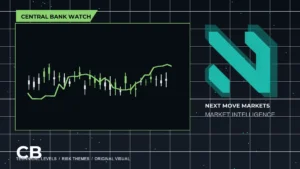
Technical setups currently favor a defensive posture. In the EUR/USD pair, the failure to clear the 1.1500 resistance level has led to a stagnant trading environment. The emergence of a bearish harami pattern on the daily chart suggests that the path of least resistance is toward the 1.1330–1.1370 support zone. A sustainable bullish reversal will require a definitive daily close above 1.1500 to invalidate the current downward bias.
For GBP/USD, the outlook is similarly cautious. Buyers were unable to hold the pair above 1.3500, leading to a structural pullback. With a bearish harami pattern confirmed, the pair is tracking toward the 1.3320–1.3340 support shelf. To flip the narrative back to bullish, the pair must achieve a decisive close above 1.3400, which would signal that the selling pressure has been absorbed.
Cross-Asset Context
The strength of the US dollar is acting as a gravity well for major currency pairs. As investors seek refuge from the Middle Eastern geopolitical situation, the dollar is benefitting from its status as a primary safe-haven asset. This trend is likely to persist so long as the security situation remains fluid. Traders should observe the correlation between geopolitical headlines and the DXY, as any de-escalation could potentially trigger a rapid correction in the US dollar, providing relief to European currencies and risk-sensitive assets.