Global energy markets remain in a state of suspended animation as geopolitical rhetoric continues to oscillate without yielding concrete policy shifts or de-escalation timelines. With the current conflict now entering its sixth month, market participants are increasingly looking past verbal posturing toward tangible supply-side indicators.
For active traders, the primary concern remains the lack of visibility regarding a potential resolution. The persistence of high-level diplomatic hedging creates an environment where market sentiment remains tethered to news-flow rather than fundamental shifts in regional production capacity. Until substantive progress is reported, the energy complex faces continued susceptibility to sudden volatility spikes driven by reactionary headlines.
Key Market Drivers
The fundamental outlook for oil is currently being shaped by the disconnect between the ongoing regional tension and the absence of actual supply disruptions. OPEC remains in a difficult position, managing internal output quotas while global inventory levels are scrutinized for signs of tightness. The market is attempting to price in a “war premium” that refuses to dissipate, yet lacks the conviction to push prices significantly higher due to broader concerns over global demand elasticity.
Liquidity has been uneven, as institutional desks remain cautious about positioning aggressively ahead of definitive geopolitical developments. The macro backdrop is further complicated by the fact that energy traders are currently forced to weigh the high probability of continued, albeit status-quo, tension against the low-probability, high-impact risk of a sudden, forced supply restriction.
Trader Takeaways
- Prioritize risk management over directional bias; high uncertainty often manifests as sudden, violent swings in both directions.
- Monitor regional shipping lanes and infrastructure reports for any signs of physical supply constraints, as these will likely supersede diplomatic rhetoric.
- Observe the correlation between energy prices and broader risk-on sentiment in equities; energy often acts as a volatility hedge during periods of high geopolitical tension.
- Avoid over-committing to breakout trades based on verbal catalysts that lack secondary confirmation from objective data.
- Maintain a shorter-term focus, as the current market regime is highly susceptible to news-driven mean reversion.
Levels and Signals to Watch
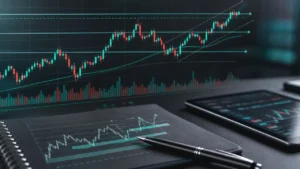
Technical signals are currently muted by the dominance of exogenous geopolitical variables. Traders should prioritize identifying zones where volume accumulation historically clusters, as these will act as primary support and resistance during periods of headlines-driven volatility. Confirmation of a trend reversal would likely require a multi-day closure outside of established horizontal ranges, backed by a significant uptick in trading volume.
Invalidation of the current range-bound narrative would likely occur if there is a shift in the status quo regarding export capacity. Market participants should be particularly wary of “fake-outs,” where initial price reactions to statements are quickly faded. Effective risk management in this environment requires tight stops and a recognition that headline risk is fundamentally unpredictable.
Cross-Asset Context
The energy complex remains inextricably linked to the broader macro environment. Oil often trades in lockstep with safe-haven assets like gold when geopolitical anxiety peaks, and inversely with the U.S. Dollar. Traders should also observe the DXY for signs of currency-driven commodity weakness; a strengthening dollar typically acts as a headwind for crude, potentially offsetting supply-risk premiums. Additionally, equity markets in energy-sensitive regions often provide a leading indicator for sentiment shifts, as regional participants react more fluidly to local geopolitical developments than global commodity desks.